

Sen. Elizabeth Warren renewed her criticism of President Donald Trump over his high-interest lending practices, arguing that his administration has failed to fulfill its promise to cap credit card interest rates at 10%.
In a May 21 post on X, Warren wrote: “Trump has repeatedly failed to deliver on his promise to cap credit card interest rates at 10%.”
He added: “The ultimate test: Will regulators allow a bank to charge interest rates over 100 percent to families across America already struggling with rising costs?”
The senator linked to an article detailing Democratic concerns about a proposed banking acquisition involving online lender Enova International Inc.
Warren and Van Hollen urge regulators to reject Enova deal
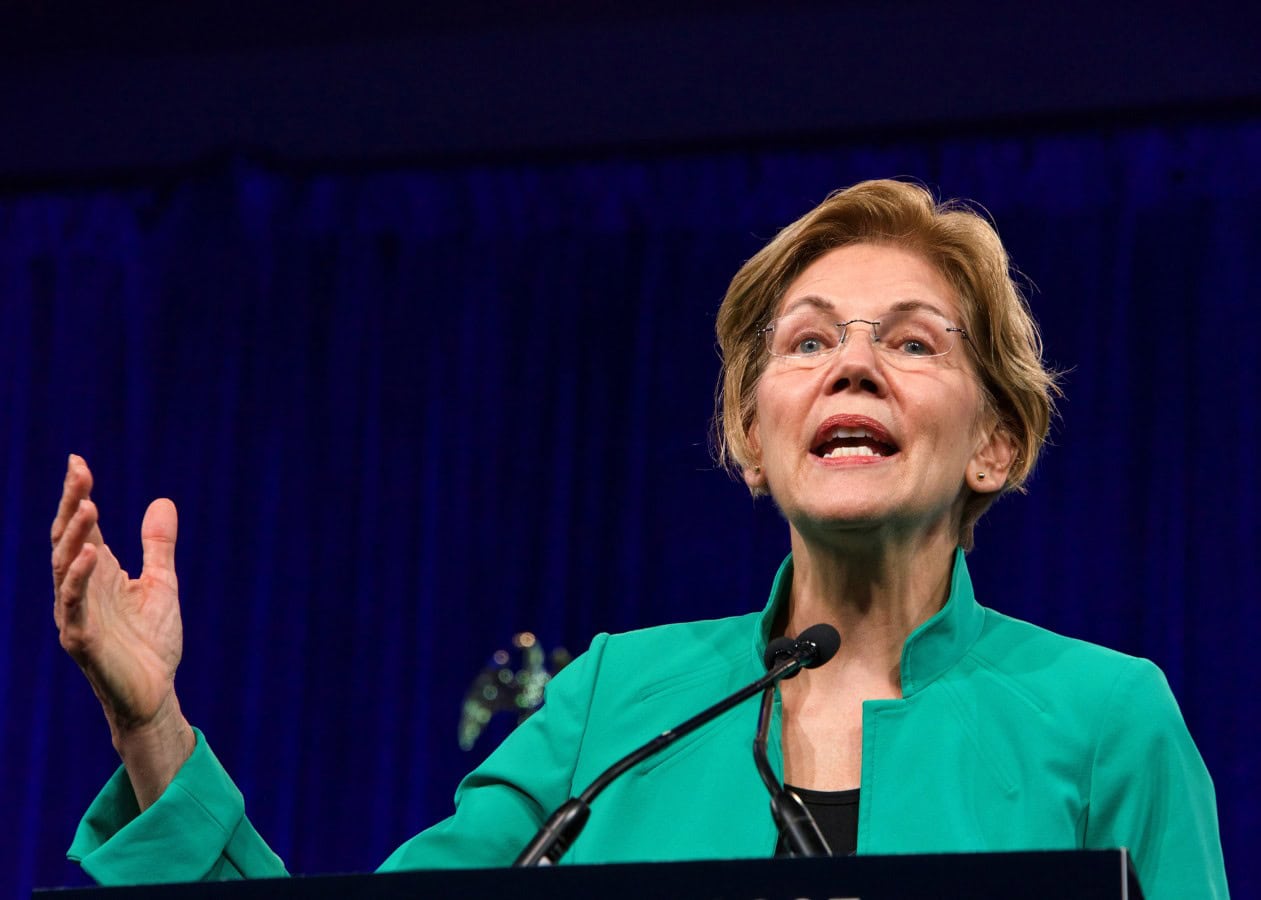
Warren and Sen. Chris Van Hollen sent a letter to federal regulators asking them to reject Enova International’s proposed $369 million acquisition of Grasshopper Bank.
Legislators argued that the transaction would allow Enova to expand subprime loans nationwide by taking advantage of Grasshopper’s national banking charter. According to the senators, the agreement could make it possible to credit interest rates of up to 300%.
Warren currently serves as the top Democrat on the Senate Banking Committee, giving her a key role in examining banking mergers and consumer finance issues.
Buying Enova would allow the company to avoid state-level interest rate caps through federal banking rules, the senators said.
Because Grasshopper has a national charter from the Office of the Comptroller of the Currency, the bank can export interest rates across state lines under federal law. Warren and Van Hollen warned that Enova could use that authority to make high-cost loans in states that ban such rates.
“By acquiring Grasshopper and moving the bank’s headquarters, Enova will be able to unlock the benefits of the bank’s national bank charter to expand Enova’s predatory lending strategies to the national stage and jettison interest rate caps in 45 states,” Warren and Van Hollen said.
Planned headquarters move to Utah raises additional concerns
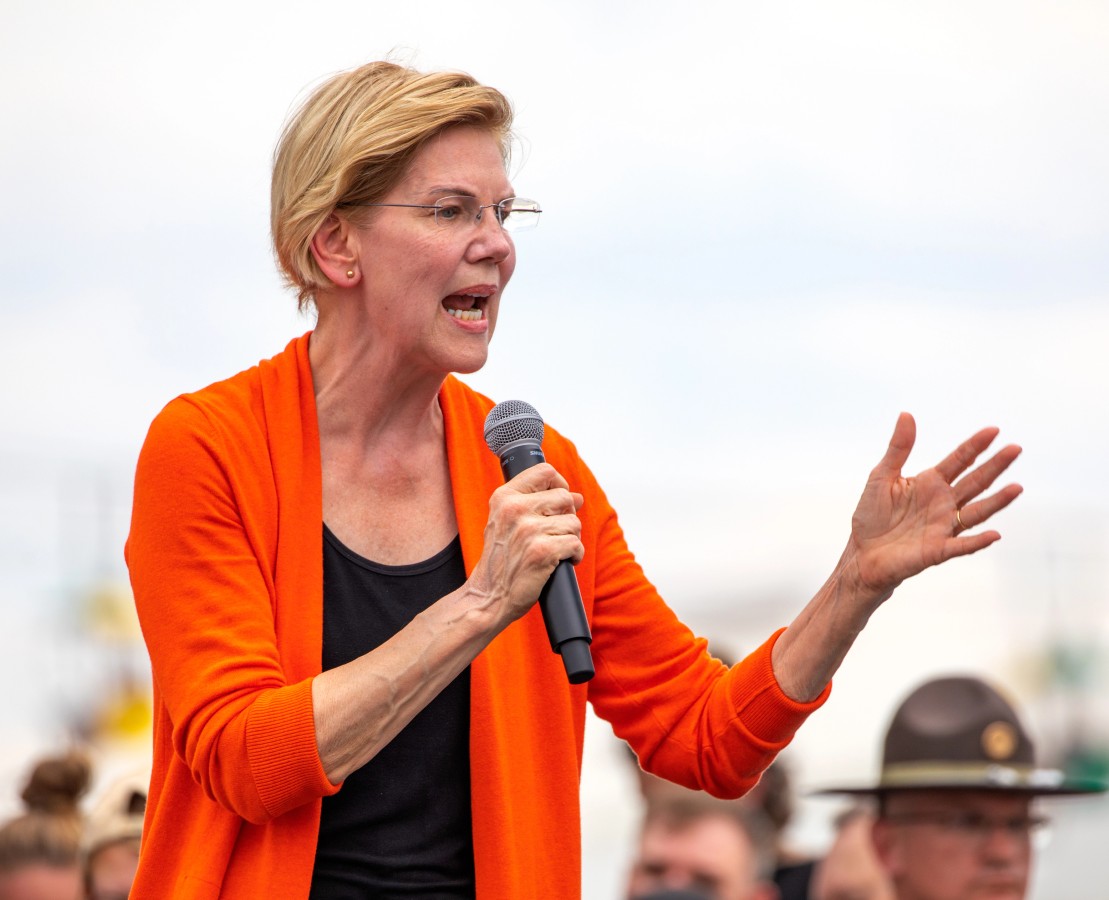
Senators also objected to Enova’s proposal to move Grasshopper’s headquarters from New York to Utah.
New York imposes a 25% criminal usury cap, while Utah has no state interest rate cap, according to lawmakers. They argued that the relocation would make it easier for Enova to make high-interest loans across the country without being constrained by stricter state laws.
Lawmakers took their concerns to Kevin Warsh and Comptroller of the Currency Jonathan Gould, both of whom will play key roles in approving the merger.
Regulators face pressure as fintech contracting activity accelerates

The proposed merger requires approval from both the Federal Reserve and the OCC under the Bank Holding Company Act and the Bank Merger Act.
The Fed declined to comment publicly on the proposal, while the OCC and Enova did not immediately respond to requests for comment.
The dispute comes as the Trump administration pushes for broader participation of fintech firms and digital lenders in the federal banking system. Earlier this week, Trump signed an executive order directing banking institutions to review regulations and charter application processes to “facilitate innovation and greater competition in the provision of financial services.”
Federal banking agencies are increasingly opening the door to non-traditional financial companies under the Trump administration.
The OCC has awarded new contracts to several cryptocurrency-related companies despite objections from banks and consumer advocacy groups. Meanwhile, the Fed in March allowed crypto platform Kraken to become the first digital asset bank to provide direct access to the federal payments system.
Critics argue that the regulatory change could weaken consumer protections and create new risks if fintech firms gain bank-like privileges without equivalent oversight standards.
Consumer advocates talk about Enova’s regulatory history
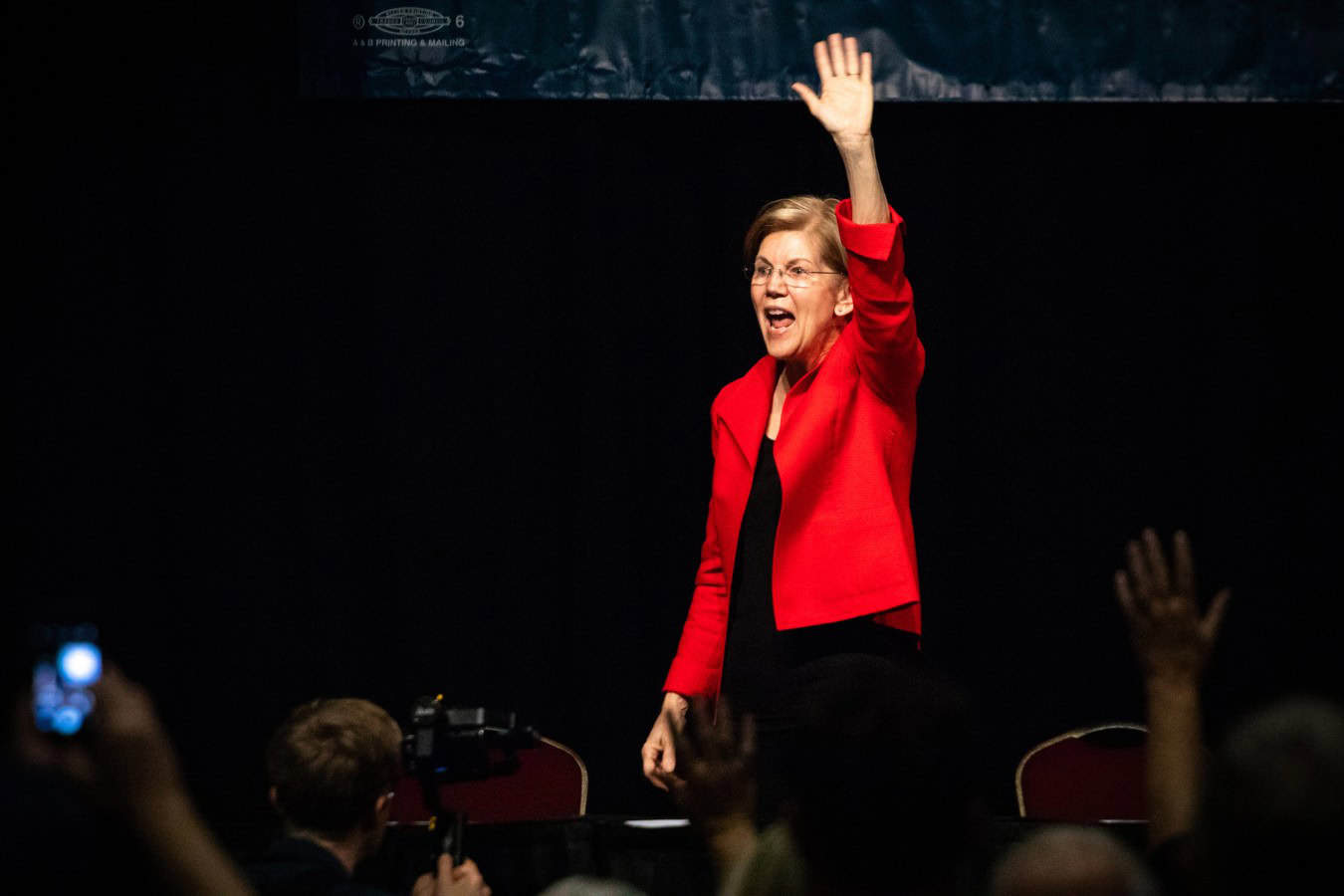
Consumer advocacy organizations strongly opposed Enova’s proposal, pointing to previous sanctions involving the company.
The Consumer Financial Protection Bureau fined Enova $3.2 million during Trump’s first term in 2019. Regulators accused the lender of taking money from customers’ accounts without permission and improperly canceling loan extensions previously granted to borrowers.
The CFPB later fined Enova an additional $15 million in 2023 for allegedly violating the terms of the earlier consent decree.
Enova operates lending businesses through its subsidiaries, including CashNetUSA and NetCredit.
Companies already make loans of up to 300% in states that allow triple-digit interest rates, according to Warren and Van Hollen. In states with stricter restrictions, NetCredit reportedly offers loans at a 99.9 percent annual rate.
The senators argued that the proposed acquisition would give Enova greater ability to expand these practices nationwide through a federally chartered banking structure.
Lawmakers point to high charge-off rates as warning sign
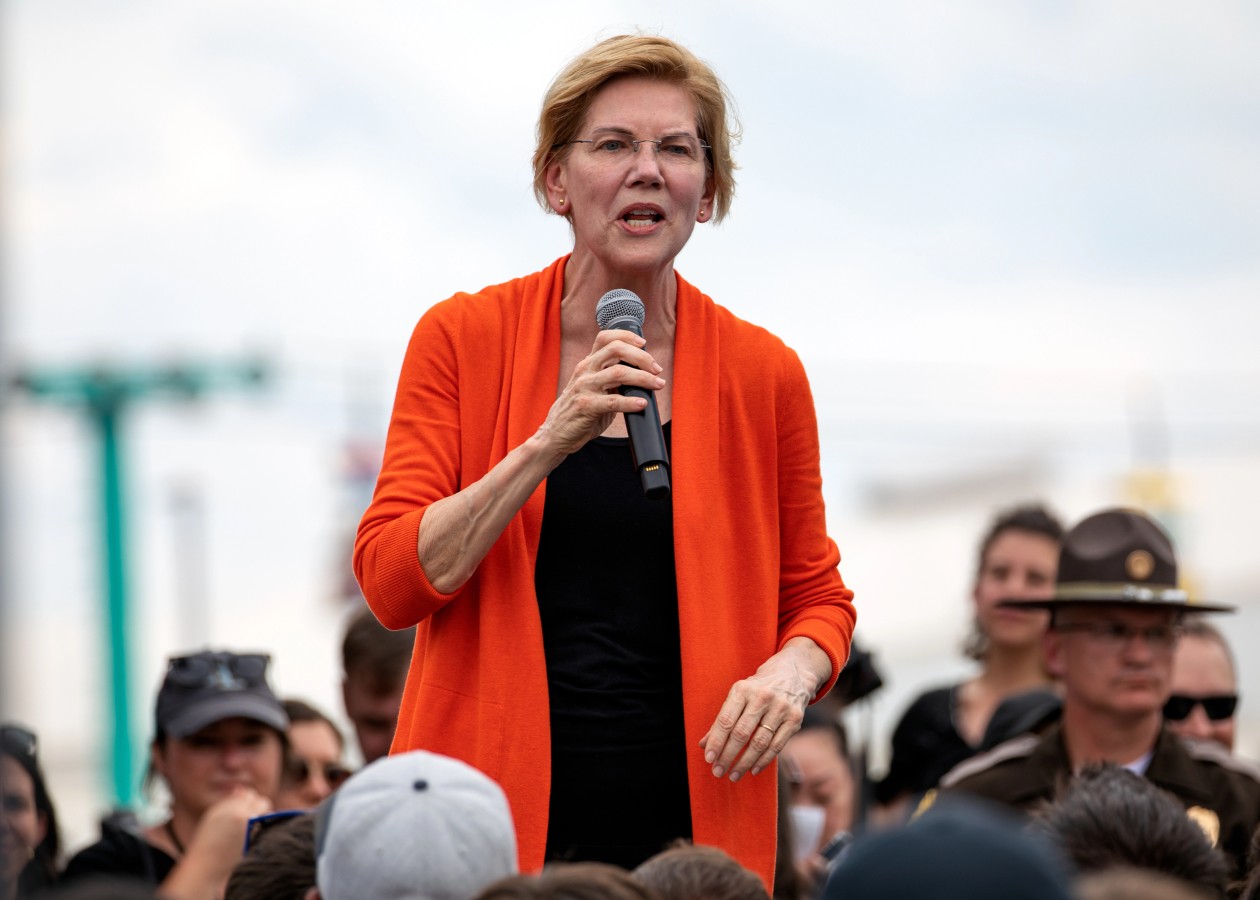
Senators also noted Enova’s loan charge-off rates, which they said exceeded 50% in some cases.
Charge-offs occur when lenders determine that loans are unlikely to be repaid. Warren and Van Hollen argued that such high rates indicate potentially unsafe or unsustainable lending practices compared to traditional banks.
Regulators have warned that approving the merger could expose more borrowers to high-cost debt and increase risks in the banking system.
Warren reminded Trump of her 10 percent credit card interest cap promise

Warren took this opportunity to remind Trump of his Jan. 9 post on Truth Social. “Please know that we will no longer allow the American People to be ‘robbed’ by Credit Card Companies charging interest rates of 20 to 30 percent and even more, which has festered unimpeded during the Sleepy Joe Biden Administration,” Trump wrote in his post. “WARNING!”
Trump said his call for a rate cut is “effective as of January 20,” the first anniversary of his inauguration.
A week after the post, on January 16, it was reported that the White House was considering taking administrative action to impose a 10 percent cap on credit card interest rates.
White House Press Secretary Karoline Leavitt said at the time that the president expected companies to lower their rates by Jan. 20.
The increasing number of fintech-bank mergers is likely to intensify discussions in Washington about consumer protection, federal preemption and the future of subprime lending in the U.S. as the midterms approach.
Did you enjoy the Financial Freedom Countdown content? Be sure to follow us!
14 essential strategies to maximize your Social Security and avoid costly mistakes

Social Security is a vital lifeline for many seniors, providing significant income support during retirement. At a time when inflation is at its highest level in four decades, Social Security’s inflation-adjusted benefits provide protection against rising costs.
Rising interest rates have disrupted many retirement portfolios and caused bond fund values to decline. In this volatile financial environment, Social Security can stabilize a typical stock-bond retirement portfolio. By implementing smart strategies, retirees can maximize their Social Security benefits and ensure a more secure financial future.
14 Essential Strategies to Maximize Your Social Security and Avoid Costly Mistakes
Did you find this article helpful? We’d love to hear your thoughts! Leave a comment and share your thoughts in the box on the left side of the screen.
Also, would you like to be informed about our latest content?
1. Follow us by clicking the (+Follow) button above,
2. Give a Like to the article in the upper left corner of the screen.
3. And finally, if you think this information would benefit your friends and family, feel free to share it with them!

John Dealbreuin came to the United States from a third world country without knowing anyone and with only $1,000; Guided by an immigrant dream. He reached his retirement number in 12 years.
he started Financial Freedom Countdown helping everyone think differently about financial challenges and live their best life. John lives in the San Francisco Bay Area and enjoys hiking and weight training.
Here are the tools he recommends
Personal Capital: This is a free tool that John uses to keep track. net worth regularly and retirement planner. He also warns her about hidden fees and budget tracker including.
Platforms like Yield Street offer investment options art, legal, real estate, structured notes, venture capitaletc. They also have fixed income portfolios that span multiple asset classes with a single investment. Low minimums of $10,000.