

India’s USDT premium is in the news after it rose above 8.5% due to contraction in stablecoin availability domestically. Currently, capital flows into the country are being blocked by regulators through both enforcement measures and increased oversight.
This imbalance increased the value of Tether (USDT) to ₹102.88 against the official USD/INR rate of ₹94.65. This shift has also led to the premium expanding well beyond the typical 3-4% range. The increasing spread may be a sign that arbitrage is becoming less effective as adjustment risks discourage capital inflows.
Meanwhile, traders, cross-border users and businesses continue to compete for the limited supply of stablecoins. If regulatory uncertainty persists, high premiums may persist and encourage greater reliance on informal trading channels.
Otherwise, clearer regulations and improved liquidity could gradually narrow the price gap and re-establish more efficient market conditions.
Regulatory pressure is reshaping stablecoin liquidity
This tightening premium increasingly reflects deeper changes in India’s stablecoin market structure rather than temporary pricing disruptions. There has been a new slowdown in regulatory practices in recent months USDT inflows reduce liquidity across P2P markets, OTC desks and exchange order books.
Due to this decrease in supply, both exchanges and on-chain flows showed minimal additions to local stock levels. However, the total number of active wallet addresses and transaction volume remained relatively strong.
The elasticity of these metrics may be evidence of the demand for USDT usage. This includes sending payments across borders, settling trade, and storing values backed by dollars, which has not diminished as supply has diminished.
These differences mean that regulations restrict the supply of USDT in India more than end use or need. If the availability of compatible entry channels is limited, liquidity shortages may persist.
But regulatory clarity and better market access could gradually revive supply and narrow India’s high USDT premium.
Can India’s stablecoin market regain its efficiency?
Rather than just increasing the price, increasing regulatory pressure is also affecting the functioning of the Indian stablecoin market. For example, according to P2P transaction data, the INR/USDT rate was around Rs 107.21 at the time of writing.
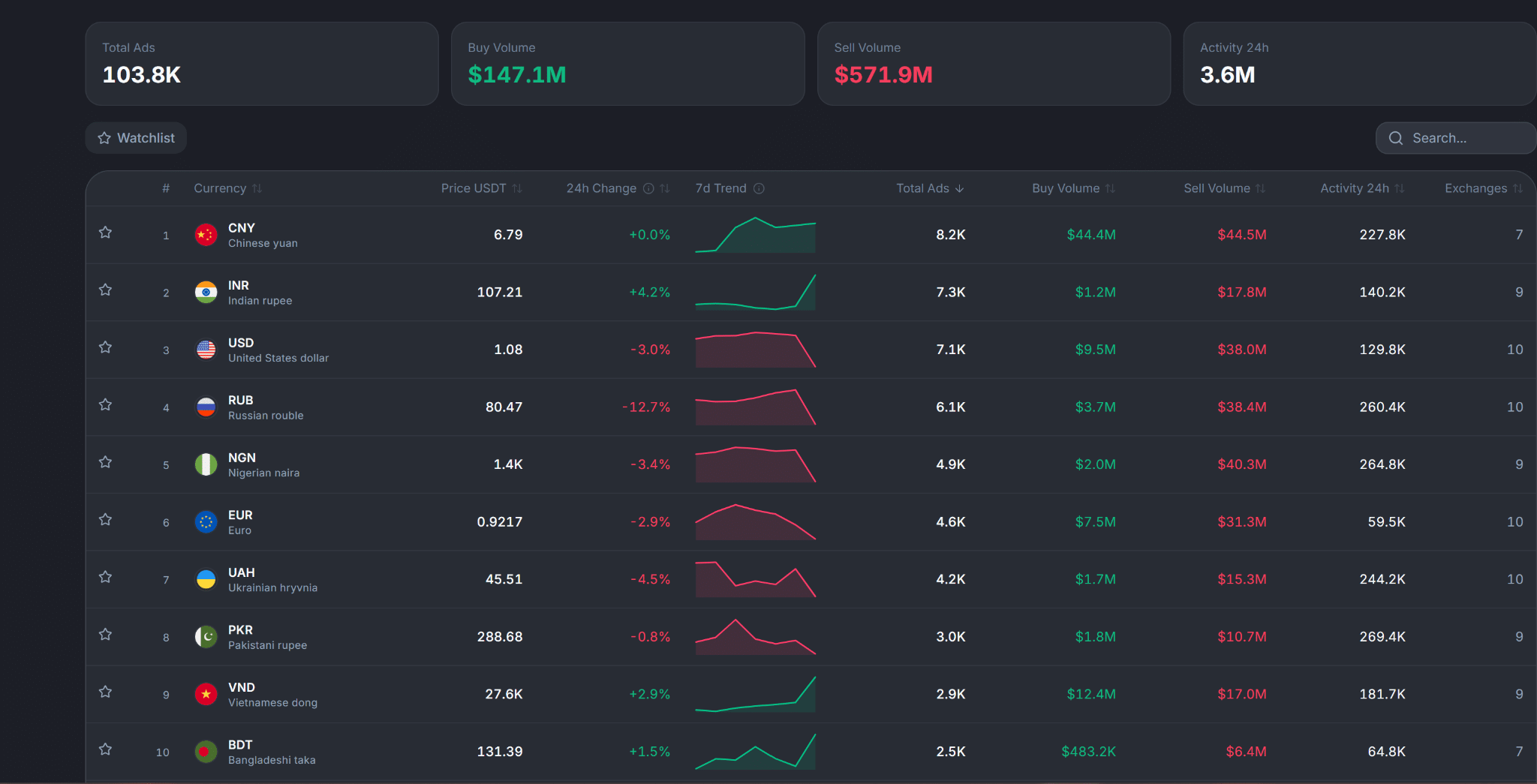
The number of daily transactions was over 140,000, but the amount of money changing hands was relatively low due to reduced liquidity. Meanwhile, purchasing volume reached only $1.2 million compared to sales volume of $17.8 million; This underlines the limited market-making capacity.
This showed that market makers were unable to operate in this environment. Also, enforcement actions and investigations surrounding ₹2500 crore in VDA transfers. This has also led to fewer new USDT inflows into the Indian market, resulting in ongoing supply shortages.
These imbalances may mean that regulatory uncertainty is currently reducing market efficiency and increasing the cost of obtaining dollar liquidity. In the long run, if conditions remain as they are now, this will lead investors to seek alternative avenues or offshore dollar liquidity.
Clearer regulations will help restore arbitrage opportunities, increase available dollar liquidity and ultimately reduce India’s USDT premium.
Final Summary
- Tether (USDT) demand in India remains resilient, but prolonged supply constraints could keep domestic premiums high.
- USDT liquidity depends on regulatory clarity, and stronger compliance pathways are needed to restore effective pricing.