

Crypto scams are becoming increasingly common and attracting widespread attention. In fact, more than three breaches have occurred in the last 24 hours; A few notable cases are highlighted below.
SecondFi fell victim to fraud
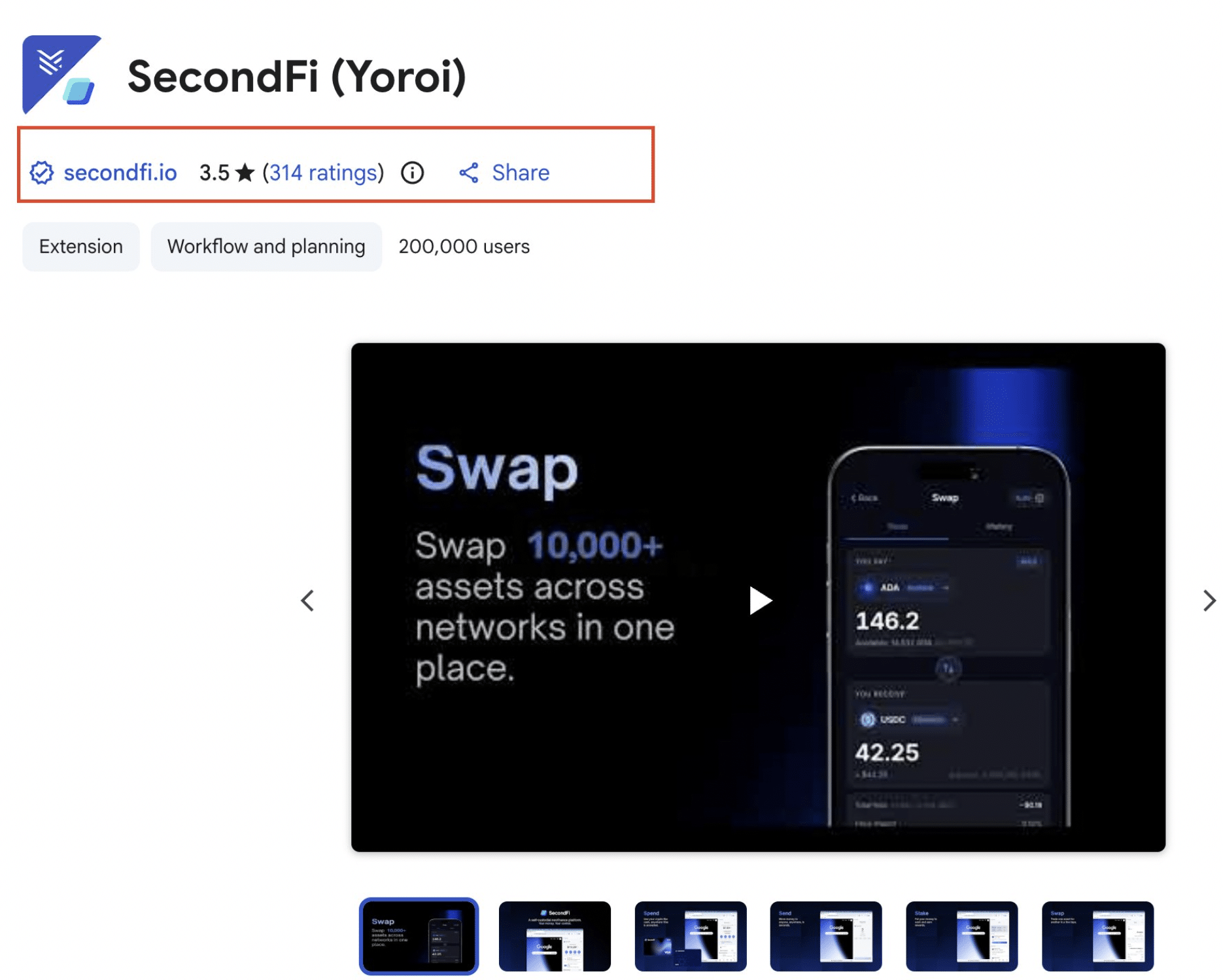
Scammers impersonated SecondFi by developing fake browser extensions and apps aimed at stealing cryptocurrency or accessing users’ wallets.
To clear up the confusion, SecondFi It was clarified,
No new app or connection, just the same.
The team maintained that it would never ask users to download software, click on links, sign transactions, or transfer assets via direct message or email.
Therefore, to prevent phishing scams and money theft, the team advised users to only install the official Chrome extension with the blue verified checkmark and access SecondFi through the official website.
How did a theft cause a loss of 180,900 SOL?
In the second case, Blockchain researcher ZachXBT claims it’s early Solana (Sun) Whale wallet was seized. This resulted in the alleged theft of 180,900 SOLs worth $14.2 million.
According to on-chain data, the wallet initially exhibited unusual staking activity; This indicates that the attacker captured the staked assets before transferring them to newly created Solana addresses to combine and exchange the funds.
The stolen assets were later transferred from Solana From Ethereum (ETH) Hide obscure transaction traces and access greater liquidity. Moreoverinvestigation suggested that some money had already been transferred using Tornado Cashmaking it much harder to track them down.
An advanced supply chain attack
Finally, jscrambler npm package became target The software supply chain attack occurred after an attacker allegedly stole login credentials needed to release new versions. For context, malicious versions 8.14.0, 8.16.0, 8.17.0, 8.18.0, and 8.20 included the information exfiltration payload.
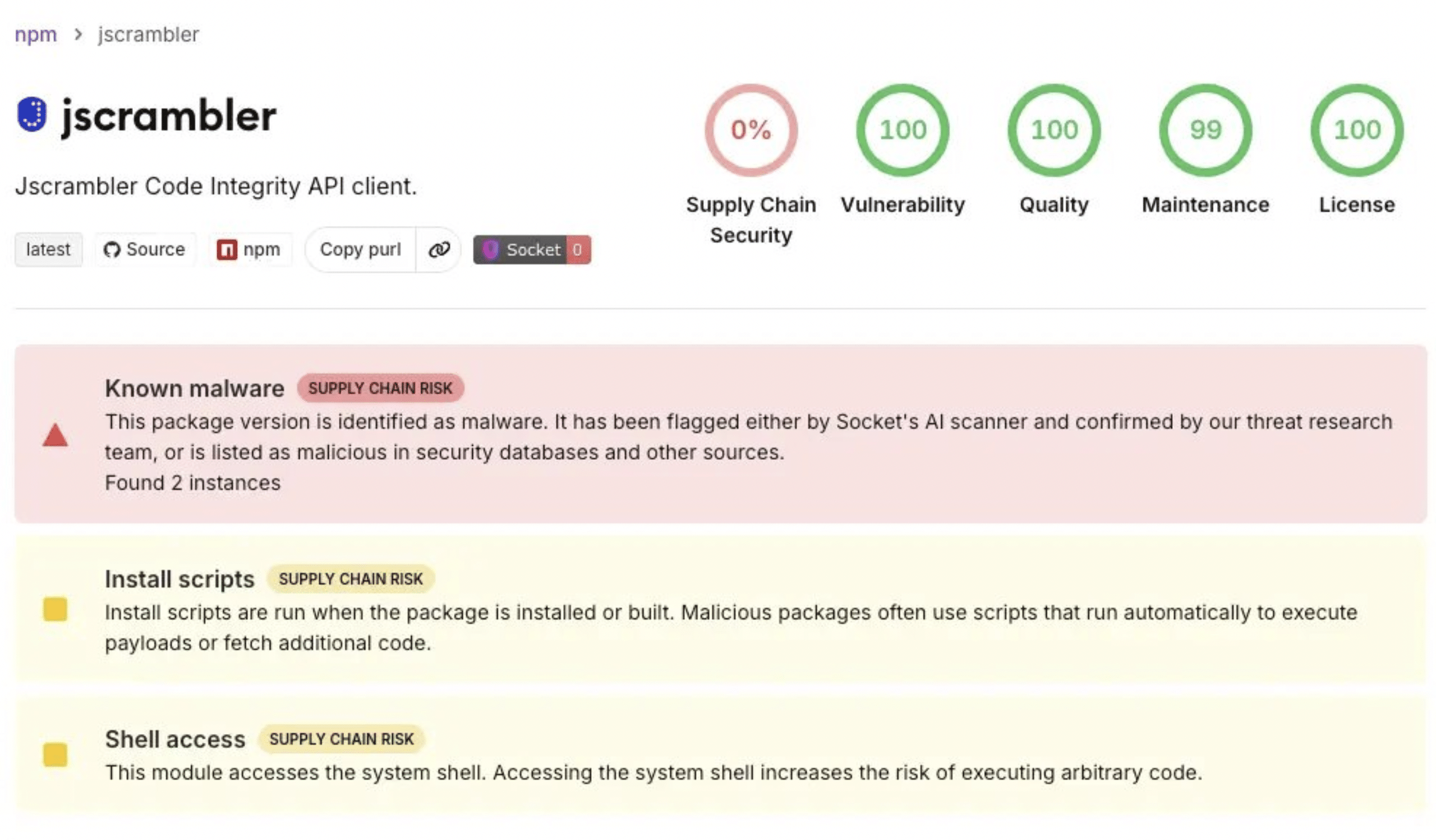
These versions are made to run malicious code on Linux, macOS or Windows systems. Initially, a pre-installation script that was automatically executed during npm installation was used to distribute the malware.
However, in versions 8.18.0 and 8.20.0, the attacker evaded security measures such as npm install –ignore-scripts, which typically halts the execution of preinstallation scripts, by including malicious code directly in the package.
According to jscrambler, the attack was made possible by compromising npm publishing credentials, which allowed unapproved versions. Following thisDevelopers were asked to immediately update to version 8.22.0 containing the fix.
Final Summary
- Different hacking techniques such as phishing scams, wallet breaches and software supply chains are raising alarms.
- Users and developers can stay safe by avoiding spam links, updating compromised software, and verifying official sources.