

Binance continues to hold deep stablecoin liquidity, but its reserve mix has changed noticeably in recent months. USD Coin (USDC) reserves have fallen 40.3% from $7.7 billion to $4.6 billion as of press time, reversing most of the gains recorded in early 2026.
Meanwhile, Tether (USDT) reserves remained stable at $38.5 billion, and the difference between both assets increased to approximately $33.9 billion. Such a difference suggests that users are choosing USDT over USDC for their currency balances, rather than signaling a broad liquidity squeeze.
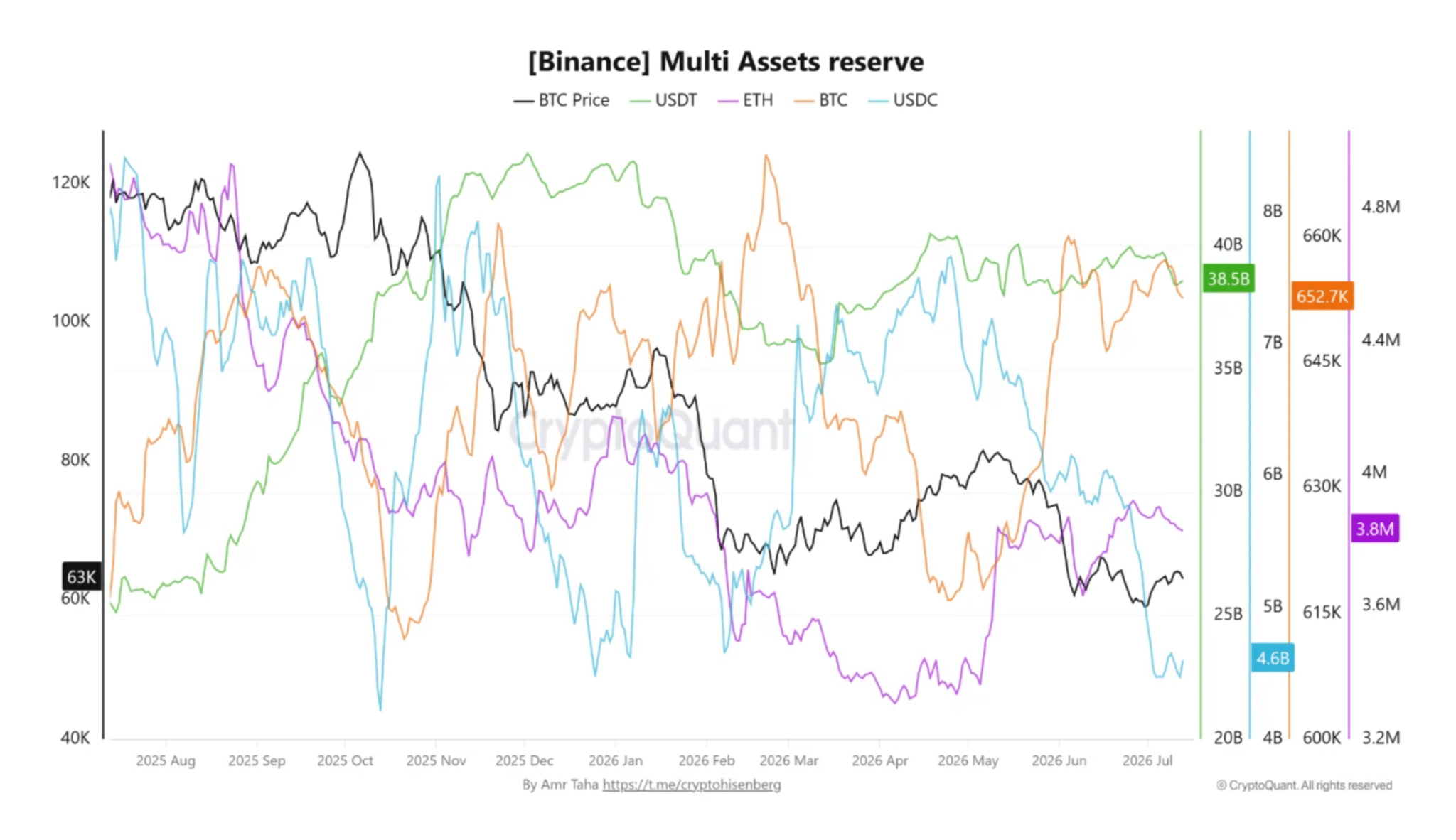
- Source: CryptoQuant
More importantly, Binance still controls approximately $53 billion, or 57% of the $93 billion held in exchange stablecoin reserves. Since the beginning of 2025, dominant stablecoin reserves have increased by 61% and $35 billion as Binance strengthens its market share.
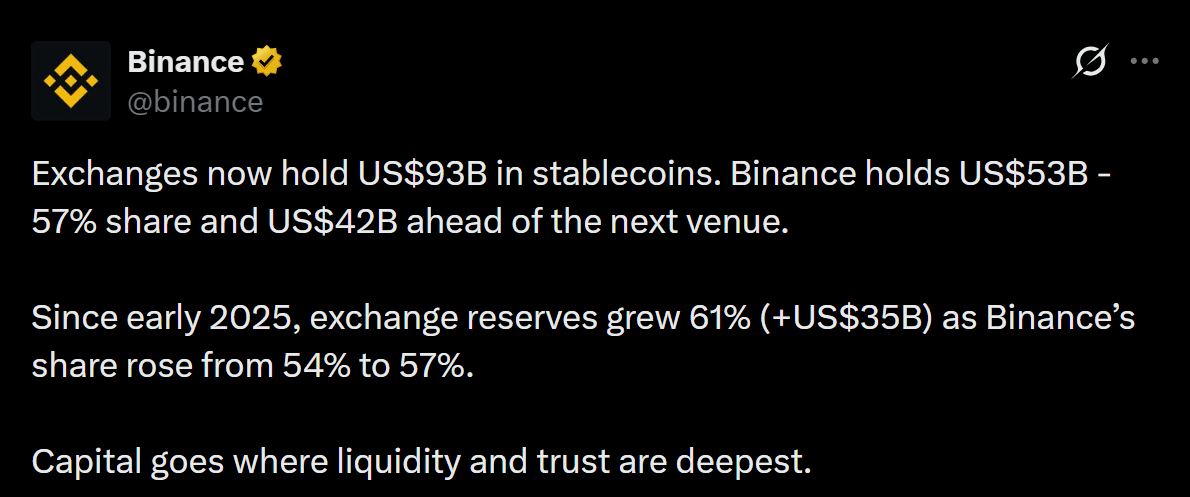
This choice strengthens Binance’s overall stablecoin base while concentrating liquidity in a dominant asset. If this trend continues USDT While it could further strengthen its role as Binance’s primary clearing and trading stablecoin, USDC faces the risk of losing relative market influence.
Stablecoin supply expands beyond whale wallets
Yet this shift towards USDT has changed the way stablecoin liquidity is distributed across the entire market. In the last three months, the top 100 USDT wallets reduced their share of the total USDT supply by 0.6%.
Additionally, the largest USDC wallets are reducing their share of the total US Dollar supply increased by 4.7%. Rather than concentrating liquidity among a handful of large investors, stablecoin reserves are spread across exchanges, institutions, protocols, and retail participants.
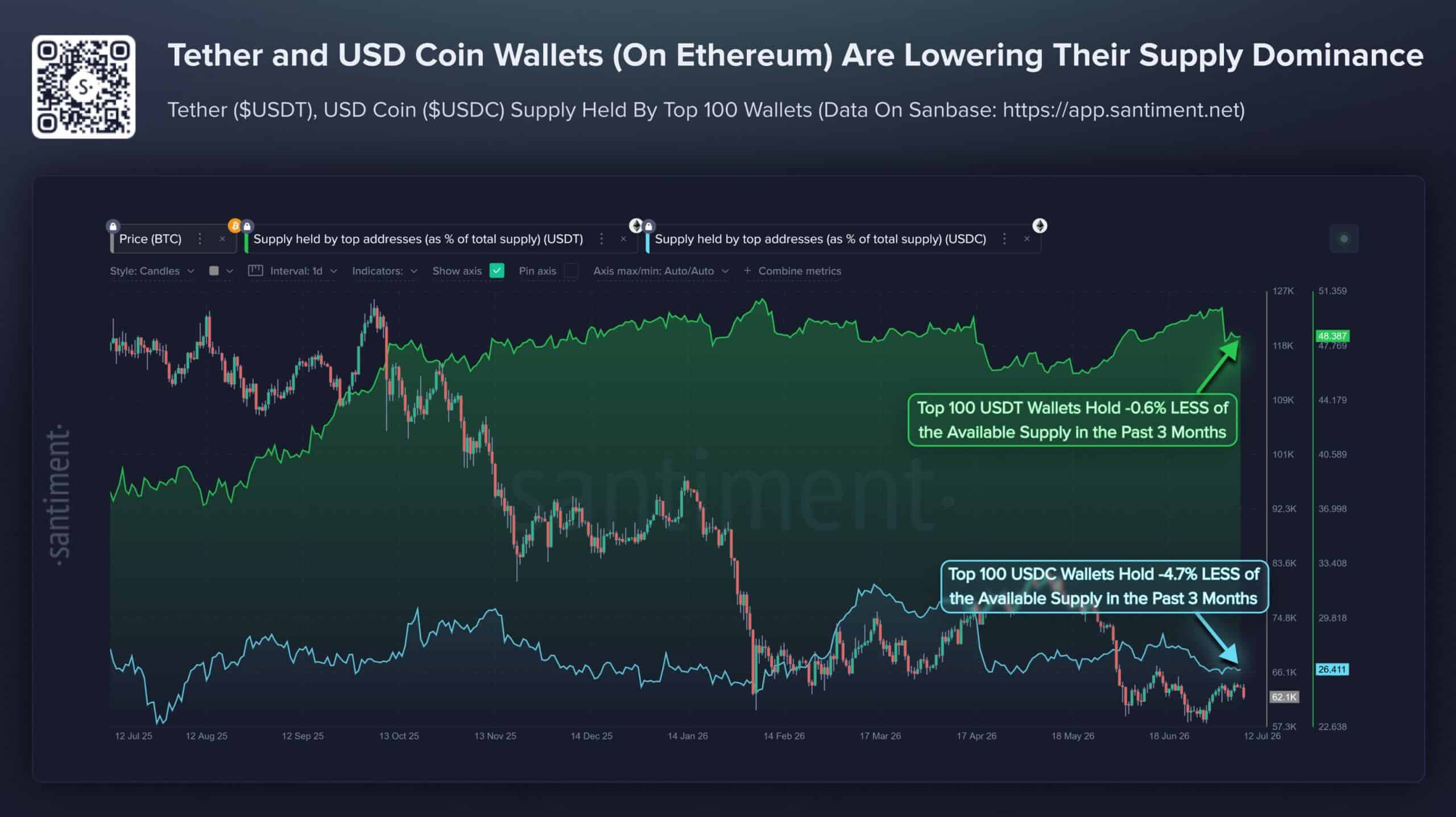
This suggests that capital is becoming more widely available rather than sitting idle in whale wallets. As institutional adoption continues to expand, broader distribution can increase market resilience by reducing dependence on a few controlling shareholders.
Such a strong liquidity foundation can support healthier, more sustainable crypto market advancements.
Could stablecoin liquidity trigger the next rally?
Attention is now shifting from stablecoin liquidity to stablecoin participation. Liquidity is increasingly spread across a wider range of users rather than remaining in the hands of just a few whale accounts.
This creates a better liquidity base. But having broader ownership doesn’t necessarily mean there will be a sustained bull run. Instead, active addresses, new wallet creation, and daily transactions must continue to expand to convert existing capital into permanent demand.
Meanwhile, stablecoin supply hovers around $312 billion, although risk asset accumulation has not yet fully accelerated. ETF flows and currency balances also offer mixed signals, suggesting that much of the liquidity has been set aside.
Therefore, the next advance in this market depends less on how much capital is available and more on investors’ willingness to deploy available capital.
Final Summary
- Tether (USDT) continues to strengthen its dominance as stablecoin liquidity spreads more widely.
- USD Coin (USDC) and USDT now need stronger participation to support the next market rally.