

Germany’s two largest banking networks are undergoing a major change by integrating cryptocurrency trading directly into their banking applications. This includes the Sparkasse savings banks and the Volksbanken Raiffeisenbanken cooperative.
Through this initiative, the banking network will allow millions of regular retail customers to buy and sell digital assets without the need for third-party cryptocurrency exchanges.
Good news for Germany’s crypto ecosystem?
These organizations collectively serve approximately 80 million customers throughout Germany. One of Europe’s largest integrations of crypto into traditional banking.
This shift is notable because just four years ago, both banking groups considered cryptocurrencies too risky. Now,Instead of collaborating with external exchanges, they are creating their own regulated cryptocurrency infrastructure.
However, cooperative banks have already introduced the meinKrypto platform through DZ Bank. For those unaware, “meinKrypto” is a platform that allows local Volksbanken and Raiffeisenbanken to deliver Bitcoin (BTC) and Ethereum (ETH) directly to millions of retail savers.
Approved by Germany’s financial regulator BaFin in December 2025, the platform operates under the European Union’s CryptoAsset Markets (MiCA) framework. Following the approval announcement on January 14, ‘meinKrypto’ officially went live.
At the same time, Boerse Stuttgart Digital offers crypto custody service, which guarantees that asset storage and trading will continue to be subject to German regulations. Meanwhile, DekaBank is preparing to launch a similar service for the country’s savings banks.
The challenges continue!
Needless to say, the initiative has been subject to criticism. This is because only a few percent of Germans who own cryptocurrencies trust their main bank much more than independent cryptocurrency platforms.
According to spouse Pierre GeorgNovice customers may underestimate the high volatility and potential for total losses associated with cryptocurrencies due to the legitimacy of well-known banks, says a professor at the Frankfurt School of Finance and Management.
George added,
It is worrying that the doors to the cryptocurrency market are now opened by savings and cooperative banks.
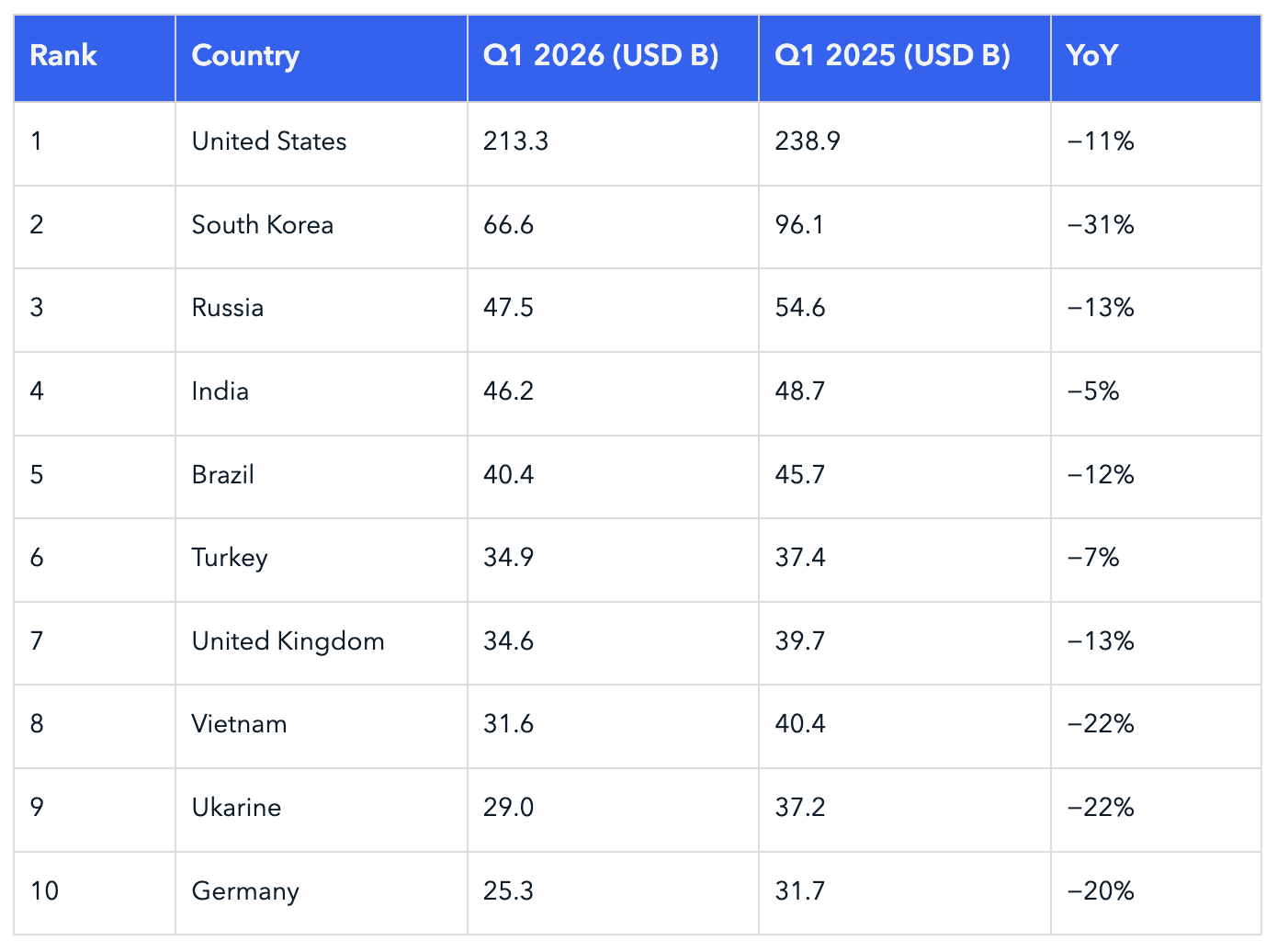
Despite this, Germany remains one of the top ten countries in terms of retail volume in the first quarter of 2026. The year-over-year comparison shows a 20% decline from Q1 2025 at $31.7 billion to Q1 2026 at $25.3 billion.
Final Summary
- Germany’s two largest banking networks are integrating cryptocurrency trading directly into their banking applications.
- Around 25% of Germans who currently own cryptocurrency trust their main bank more than independent cryptocurrency platforms.