

Markets often view any “weak hand” shake as a bullish signal.
The logic is simple. During the bear phase, short-term holders (STHs) who have held Bitcoin (BTC) for less than five months begin selling at a loss, adding new supply to the market. Considering Bitcoin fell from around $80k to $59k, it’s no surprise that these holders were under pressure and locked in losses.
As the chart below shows, approximately 50,000 BTC were sent to exchanges at a loss in the last 24 hours, according to CryptoQuant. At the same time, STH Market Cap fell to $237.7 billion, its lowest level since October 2024.
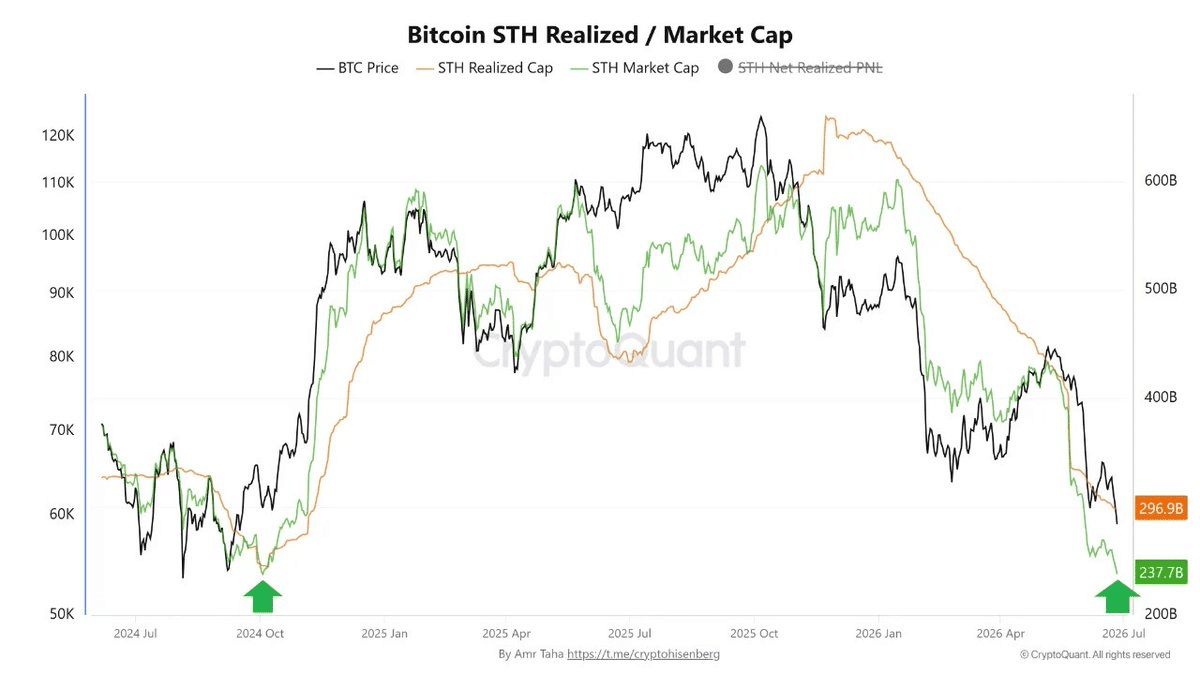
In short, weaker hands are surrendering, a classic sign of a late-stage bearish trend.
Reinforcing this view, the Fear and Greed Index returned to the “extreme fear” zone after Bitcoin fell below $60,000. Historically, this is the phase where weak hands move out and losses are locked in as stronger hands come into play. As a result, BTC’s weeklong consolidation between $58K and $60K looks like a potential bottom, and on-chain data generally supports this thesis.
another key signal It comes from miners. The production cost of Bitcoin has risen to around $78,000, well above the current spot price of around $60,000, putting mining operations under pressure. On-chain data currently indicates miners are offline; This is a trend that has historically emerged in the final stages of a bear market.
Taken together, the setup suggests: Bitcoin It may be carving a bottom. But a critical piece is still missing: Where is the demand?
Why supply shock matters for Bitcoin’s next move
Each capitulation signal gives smart money a chance to accumulate.
The logic is simple. As weak hands, miners, and STHs sell at a loss, more BTC returns to circulation, increasing the sell-side supply. Ideally, buyers should absorb this supply to maintain market equilibrium. This may appear to be the case with Bitcoin consolidating around $60k.
However, on-chain data shows otherwise. As the chart shows, there are currently 3.5 million BTC on CEXs. Since the beginning of 2026, foreign exchange reserves have increased by a net 85 thousand BTC. So instead of leaving exchanges, BTC continues to flow into them, indicating that the market has not yet been able to absorb the recent selling wave.
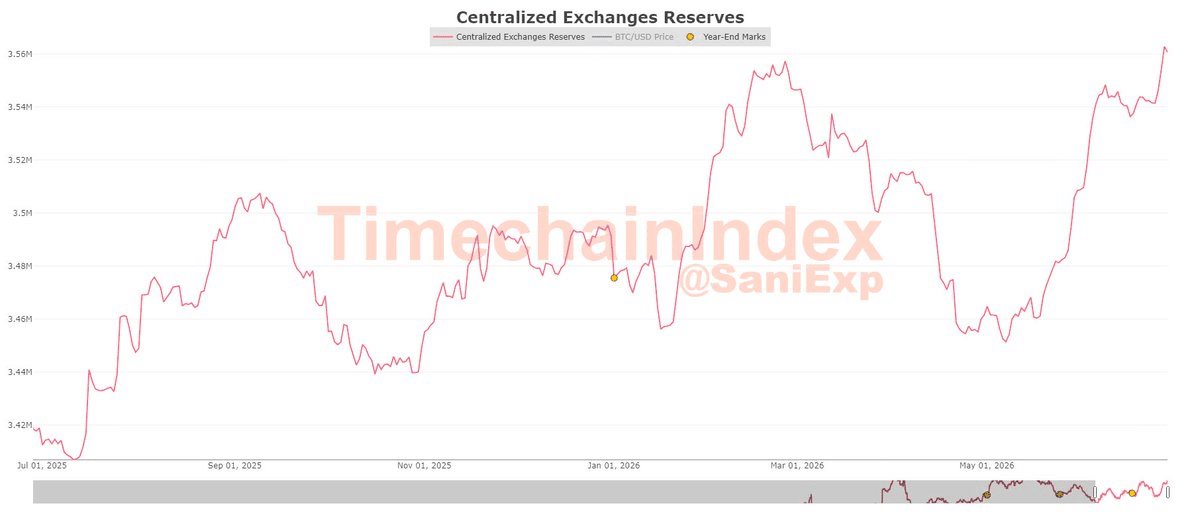
As a result, a meaningful supply shock is unlikely to occur until foreign exchange balances begin to decline.
This also makes Bitcoin’s bottom story appear premature. While weak sentiment, miner stress, technical consolidation and STH capitulation point to a potential bottom, demand has yet to kick in. Institutional flows reinforce this view.
Last month, spot Bitcoin ETFs saw a net outflow of 71.6k BTC while Digital Asset Treasuries (DATs) added only 7.5k BTC. After adjusting for new issuance, combined flows show 77k BTC in red. Simply put, buyers are still unable to absorb excess supply, which is the essential condition for a real supply shock.



