
The International Monetary Fund has issued a stark warning: The long-standing “safety premium” tied to U.S. Treasuries is eroding. Once seen as the world’s ultimate safe haven, Treasuries now face structural pressure as rising debt levels reshape global investor behavior.
“The increase in the supply of U.S. Treasury securities is compressing the security premium that the U.S. Treasury has traditionally commanded, an erosion that is increasing borrowing costs globally,” the IMF said.
Exploding deficits are causing unprecedented debt levels
Annual US budget deficits reached roughly $2 trillion, bringing the total national debt to $39 trillion. Interest costs are now approaching $1 trillion annually, creating a feedback loop in which borrowing leads to more borrowing.
This rapid expansion means the government must constantly issue new debt, increasing dependence on investor demand at a time when demand is uncertain.
As supply increases, Treasury yields also rise, signaling that investors need higher yields to hold U.S. bonds. This shift is important because Treasury yields serve as a reference point for borrowing costs across the economy and affect everything from mortgages to student loans.
Geopolitical pressures and rising defense spending are expected to further deteriorate the fiscal outlook and maintain upward pressure on yields.
Treasury bonds lose value due to corporate debt

The IMF noted that Treasuries are increasingly competing with the rise in corporate bond issuance. Large-scale borrowing, especially by AI-driven “hyperscaler” companies, has flooded markets with alternative investment options.
This has squeezed the spread between AAA-rated corporate bonds and Treasuries; This is a clear sign that investors no longer view government debt as overwhelming.
One of the most concerning developments is the decline in the “convenience yield,” which reflects the safety and liquidity advantages of Treasury bonds.
“In other words, Treasuries now offer higher returns than synthetic dollar equivalents for hedged G10 government bonds,” the IMF said.
This reversal suggests investors now need extra compensation for holding Treasuries rather than accepting lower yields for their own safety.
Global investors are turning to alternative safe assets

Demand patterns are changing beyond US borders. Bonds issued by institutions such as the World Bank and the European Investment Bank attract great interest.
The recent $4 billion European Investment Bank bond auction attracted more than $33 billion in orders, with yields only marginally above similar Treasuries. This shows how close substitutes are emerging for what was once a uniquely dominant asset class.
Another structural change is taking place in the investor base. As global central banks, historically the biggest buyers of Treasuries, become less dominant, hedge funds are also increasing their holdings.
Hedge funds now own a record share of Treasuries, financed mostly through leveraged positions. This brings additional risk to the system, as the sudden unwinding of these transactions could destabilize markets.
Leverage risks can trigger market shockwaves
Apollo chief economist Torsten Slok warned about the extent of leverage tied to Treasury assets.
“Hedge funds own a record 8% of U.S. Treasuries, and with a combination of repo and prime broker borrowings exceeding $6 trillion, the forced unwinding of these leveraged positions could send shock waves through global fixed income markets,” he said.
Such dynamics increase the fragility of what has traditionally been the most stable segment of global finance.
Debt trajectory considered unsustainable by policymakers

The IMF said the US’s fiscal path was governed by “inevitable” arithmetic and called on policymakers to address both revenue and spending.
According to the Congressional Budget Office, U.S. debt has already reached 100% of GDP and is expected to exceed 150% by 2055, largely driven by Social Security and Medicare obligations.
“The window for orderly financial regulation is narrowing,” the IMF said. “Advanced economies with large debt burdens need concrete, well-sequenced consolidation measures, not ambitious medium-term targets.”
Henry Paulson warns of potential bond market crisis
Former Treasury Secretary Henry Paulson echoed these concerns, warning that the United States could face a destabilizing loss of confidence in the bond market.
“This is a dangerous thing,” he said, describing a scenario in which falling demand causes Treasury prices to fall and yields to rise.
The U.S. Treasury market forms the basis of both domestic and global financial systems. It enables government financing and serves as a reference point for interest rates around the world.
Historically, strong global demand for Treasury securities has reinforced the U.S. dollar’s status as the world’s reserve currency. Any erosion of this demand could have far-reaching consequences for financial stability.
Urgent measures may be required to prevent crisis
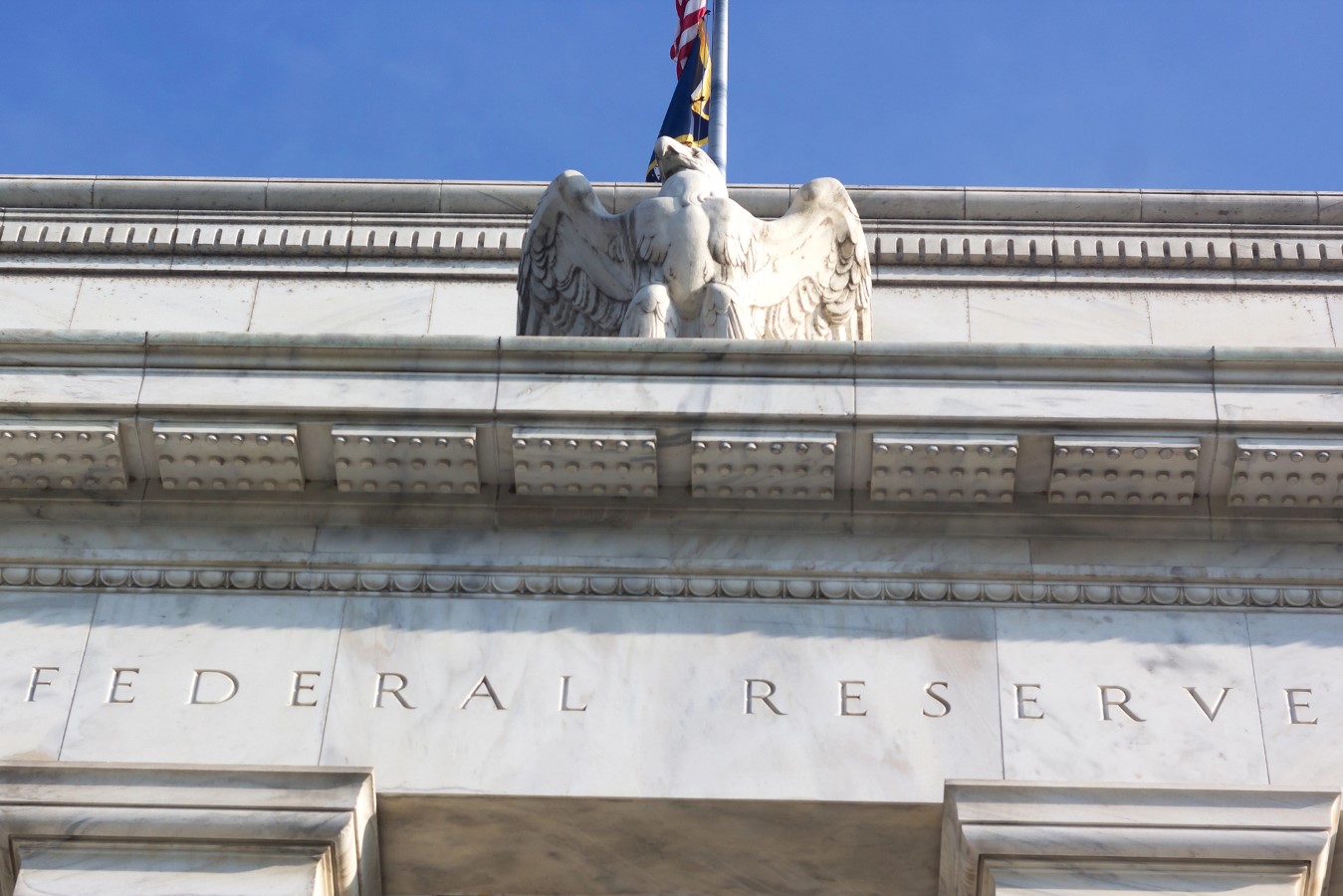
Paulson warned that the Federal Reserve may have to act as a buyer of last resort if demand weakens significantly; could potentially worsen the debt spiral by undermining confidence.
“We need a targeted, short-term contingency breaking plan sitting on the shelf so it will be ready for action when we hit the wall,” he said.
“It’s going to be bad,” he added. “We must be prepared for this possibility.”
Both the IMF and market veterans agree: The United States still has time to act, but that window is quickly closing. Rising debt levels without meaningful fiscal reforms could trigger a cycle of higher borrowing costs, weakening demand and increasing financial instability.
The warning is clear; What was once unthinkable for the world’s safest asset has now become a growing risk.
Did you enjoy the Financial Freedom Countdown content? Be sure to follow us!
14 essential strategies to maximize your Social Security and avoid costly mistakes

Social Security is a vital lifeline for many seniors, providing significant income support during retirement. At a time when inflation is at its highest level in four decades, Social Security’s inflation-adjusted benefits provide protection against rising costs.
Rising interest rates have disrupted many retirement portfolios and caused bond fund values to decline. In this volatile financial environment, Social Security can stabilize a typical stock-bond retirement portfolio. By implementing smart strategies, retirees can maximize their Social Security benefits and ensure a more secure financial future.
14 Essential Strategies to Maximize Your Social Security and Avoid Costly Mistakes
11 reasons to claim Social Security early

Deciding when to claim Social Security is often about maximizing your benefits. Financial planners generally recommend delaying your request for as long as possible to secure the highest monthly payment. Your benefit is based on your lifetime earnings, with full payout available at your full retirement age (FRA); this age is currently between 66 and 67 years old, depending on your year of birth. Claiming before FRA will result in a permanent decrease in your monthly earnings, while waiting after FRA will result in a permanent increase. But the decision isn’t just about maximizing the monthly check. Personal factors such as health, family circumstances and financial needs can play an important role in determining the right time to make a claim.
11 Reasons to Apply for Social Security Early

Did you find this article helpful? We’d love to hear your thoughts! Leave a comment and share your thoughts in the box on the left side of the screen.
Also, would you like to be informed about our latest content?
1. Follow us by clicking the (+Follow) button above,
2. Give a Like to the article in the upper left corner of the screen.
3. And finally, if you think this information would benefit your friends and family, feel free to share it with them!

John Dealbreuin came to the United States from a third world country without knowing anyone and with only $1,000; Guided by an immigrant dream. He reached his retirement number in 12 years.
he started Financial Freedom Countdown helping everyone think differently about financial challenges and live their best life. John lives in the San Francisco Bay Area and enjoys hiking and weight training.
Here are the tools he recommends
Personal Capital: This is a free tool that John uses to keep track. net worth regularly and retirement planner. He also warns her about hidden fees and budget tracker including.
Platforms like Yield Street offer investment options art, legal, real estate, structured notes, venture capitaletc. They also have fixed income portfolios that span multiple asset classes with a single investment. Low minimums of $10,000.



