

The cost of servicing the U.S. national debt has risen to historic levels, with the federal government now paying nearly $88 billion a month in interest. That totals around $529 billion in just the first six months of fiscal 2026, according to new estimates from the Congressional Budget Office.
This pace puts interest payments on par with total spending on key priorities such as defense and education; It’s a remarkable shift that underscores how debt servicing has become one of the government’s biggest expenses.
Breaking down the numbers further reveals the magnitude of the burden: More than $22 billion a week now goes to interest payments alone.
That means a growing share of taxpayer dollars is being used not for new programs or investments, but simply to maintain existing obligations tied to the nation’s $39 trillion debt.
Increasing debt and high interest rates trigger the increase

The Congressional Budget Office attributes the increase to two main factors: a larger overall debt burden and persistently high long-term interest rates.
While some easing in short-term interest rates has helped somewhat, it has not been enough to offset the broader upward trend. Compared to the same period last year, interest payments increased by $33 billion; An increase of 7%.
In this context, the government spent approximately $461 billion on defense and $70 billion on education in the same six-month period.
The fact that interest payments alone now rival those combined totals underscores how quickly debt payments are climbing the list of federal priorities; without offering new services or benefits.
Incomes are rising but the deficit remains

There are some signs of improvement in state finances. Federal revenues reached $2.5 trillion in the first half of the fiscal year, up $223 billion from the previous year.
But spending continues to outpace revenues. Spending rose to $3.65 trillion, leaving a $1.2 trillion deficit; Although it is $140 billion smaller than last year, there is still a big difference.
Even though incomes are high, borrowing continues at a serious pace. In March alone, the federal government ran a deficit of $163 billion.
The figure underscores the structural imbalance between spending and revenue and shows that the United States is still on track to borrow more than $2 trillion for the full fiscal year.
Trump’s 2027 budget is under scrutiny

The fiscal outlook was also shaped by proposals from Donald Trump and his administration’s fiscal year 2027 budget.
The plan calls for major increases in defense spending while envisaging major revenue gains resulting from faster economic growth. But critics argue that the forecasts are based on overly optimistic assumptions about GDP growth and future savings.
The White House budget assumes the economy will grow at an annual rate of 3 percent; That’s well above estimates from the Federal Reserve and the Congressional Budget Office, which had expected a rate of 2 percent or less.
Skeptics say such projections inflate expected revenues, mask the true cost of proposed spending increases and make long-term deficit reduction appear more achievable than it might be.
Spending cuts and savings are being questioned
The budget also proposes significant cuts to non-defense discretionary spending; cuts that would cause these programs to shrink by approximately 20% over a decade.
Analysts suggest this would require unprecedented restraint among agencies like NASA, Homeland Security and veterans services, making predictions based on historical trends difficult to achieve.
Wall Street voices warn of potential crisis

Concerns extend beyond Washington. JPMorgan Chase CEO Jamie Dimon warned that the US financial trajectory could eventually trigger market instability.
“The best way to deal with the problem is to actually address the problem, acknowledge it and work on it,” Dimon said, referring to the long-running failure to enact comprehensive deficit reforms.
Dimon pointed to the National Commission on Fiscal Responsibility and Reform; A bipartisan effort was assembled under Barack Obama; it is seen as a missed opportunity to overcome long-term financial challenges.
Although the commission recommended a mix of spending cuts and tax reforms, its recommendations were never fully implemented.
Bipartisan inaction remains a significant obstacle
Despite widespread recognition of the problem, meaningful action has been elusive. Policymakers on both sides fail to agree on solutions even as debt levels and interest costs continue to rise.
As Dimon put it, “Neither Democrats nor Republicans have really focused on this issue for a while…we just haven’t had the will to really engage with it yet.”
Debt-to-GDP ratio becomes a central concern
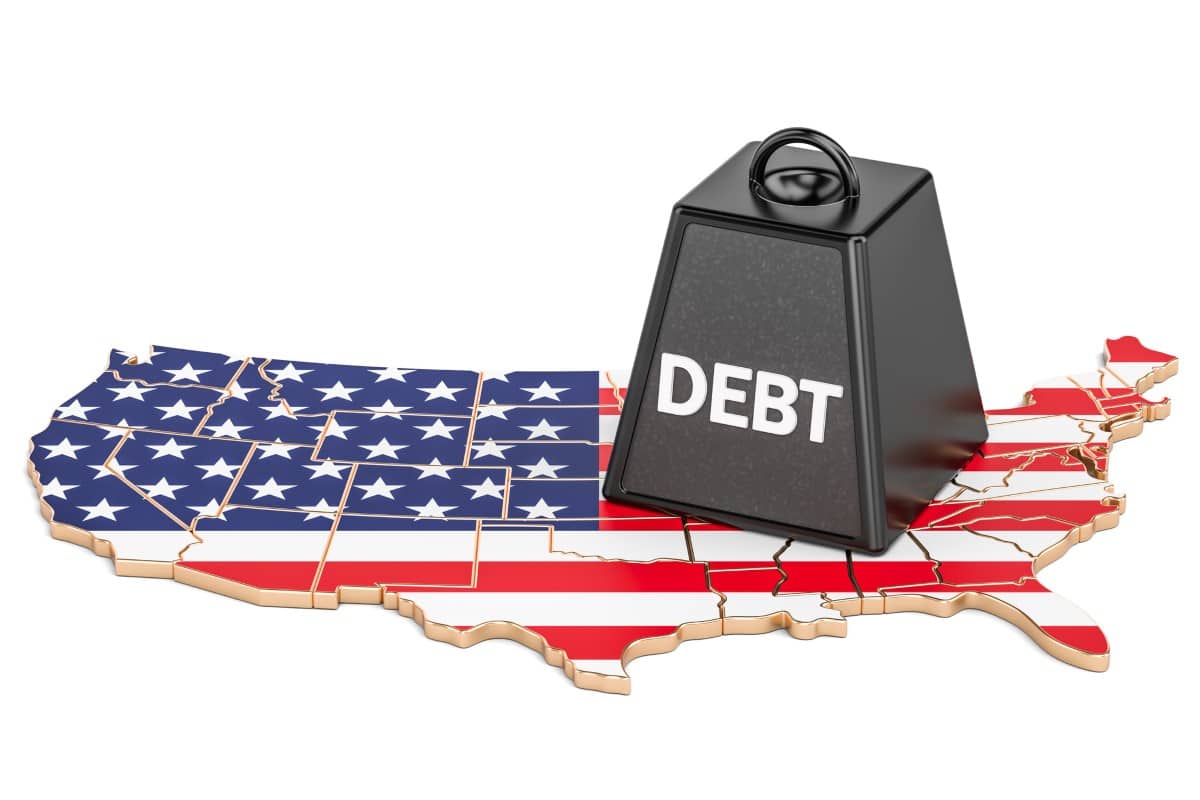
Economists are increasingly focusing on the debt-to-GDP ratio, which currently stands around 122 percent. This measure reflects the country’s ability to manage its debt relative to economic output.
Lowering this rate usually requires either cutting spending or accelerating economic growth; difficult roads both politically and economically.
Some analysts suggest that stronger economic growth could ease the burden by boosting revenues without major spending cuts. For example, Dimon suggested that sustainable growth of 3 percent could help stabilize the debt trajectory.
But if growth falls short and debt continues to rise, the United States could face increasing pressure from financial markets, including higher interest rates and reduced demand for Treasuries.
A growing risk with uncertain timing

While experts disagree on when the situation might reach a tipping point, there is broad agreement that current trends are unsustainable in the long term.
Whether the result is a gradual adjustment or a more sudden market response, the rising cost of servicing the national debt is becoming one of the most significant challenges facing the U.S. economy.
Did you enjoy the Financial Freedom Countdown content? Be sure to follow us!
14 essential strategies to maximize your Social Security and avoid costly mistakes

Social Security is a vital lifeline for many seniors, providing significant income support during retirement. At a time when inflation is at its highest level in four decades, Social Security’s inflation-adjusted benefits provide protection against rising costs.
Rising interest rates have disrupted many retirement portfolios and caused bond fund values to decline. In this volatile financial environment, Social Security can stabilize a typical stock-bond retirement portfolio. By implementing smart strategies, retirees can maximize their Social Security benefits and ensure a more secure financial future.
14 Essential Strategies to Maximize Your Social Security and Avoid Costly Mistakes
11 reasons to claim Social Security early

Deciding when to claim Social Security is often about maximizing your benefits. Financial planners generally recommend delaying your request for as long as possible to secure the highest monthly payment. Your benefit is based on your lifetime earnings, with full payout available at your full retirement age (FRA); this age is currently between 66 and 67 years old, depending on your year of birth. Claiming before FRA will result in a permanent decrease in your monthly earnings, while waiting after FRA will result in a permanent increase. But the decision isn’t just about maximizing the monthly check. Personal factors such as health, family circumstances and financial needs can play an important role in determining the right time to make a claim.
11 Reasons to Apply for Social Security Early

Did you find this article helpful? We’d love to hear your thoughts! Leave a comment and share your thoughts in the box on the left side of the screen.
Also, would you like to be informed about our latest content?
1. Follow us by clicking the (+Follow) button above,
2. Give a Like to the article in the upper left corner of the screen.
3. And finally, if you think this information would benefit your friends and family, feel free to share it with them!

John Dealbreuin came to the United States from a third world country without knowing anyone and with only $1,000; Guided by an immigrant dream. He reached his retirement number in 12 years.
he started Financial Freedom Countdown helping everyone think differently about financial challenges and live their best life. John lives in the San Francisco Bay Area and enjoys hiking and weight training.
Here are the tools he recommends
Personal Capital: This is a free tool that John uses to keep track. net worth regularly and retirement planner. He also warns her about hidden fees and budget tracker including.
Platforms like Yield Street offer investment options art, legal, real estate, structured notes, venture capitaletc. They also have fixed income portfolios that span multiple asset classes with a single investment. Low minimums of $10,000.